


Ebogenes Store
EBOGENES Omega-3 Index Test – At-Home Blood Spot Kit
EBOGENES Omega-3 Index Test – At-Home Blood Spot Kit
Couldn't load pickup availability
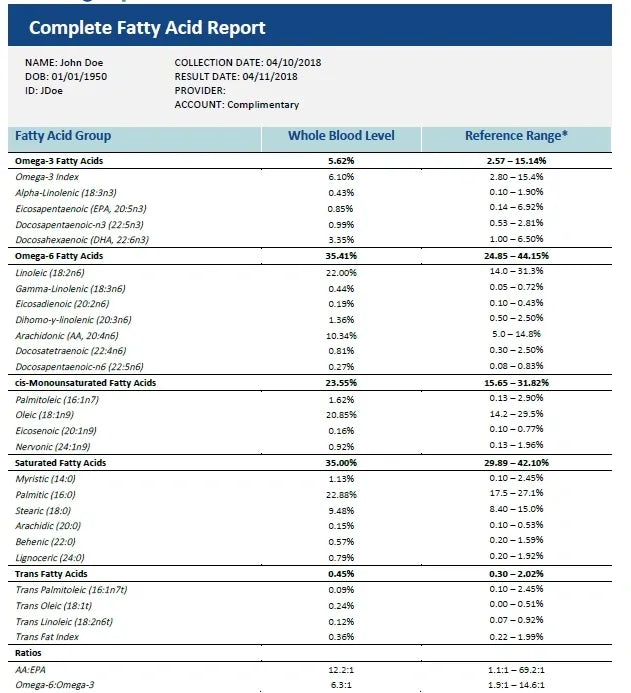
An at-home finger-prick blood spot test that measures EPA and DHA in your red blood cells (the Omega-3 Index), plus your full red-blood-cell fatty-acid profile.
What it tests
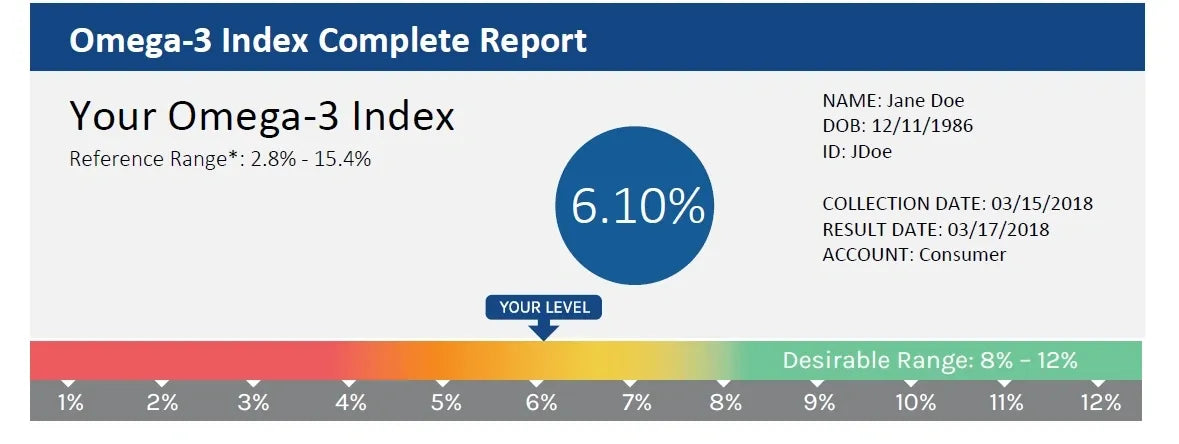
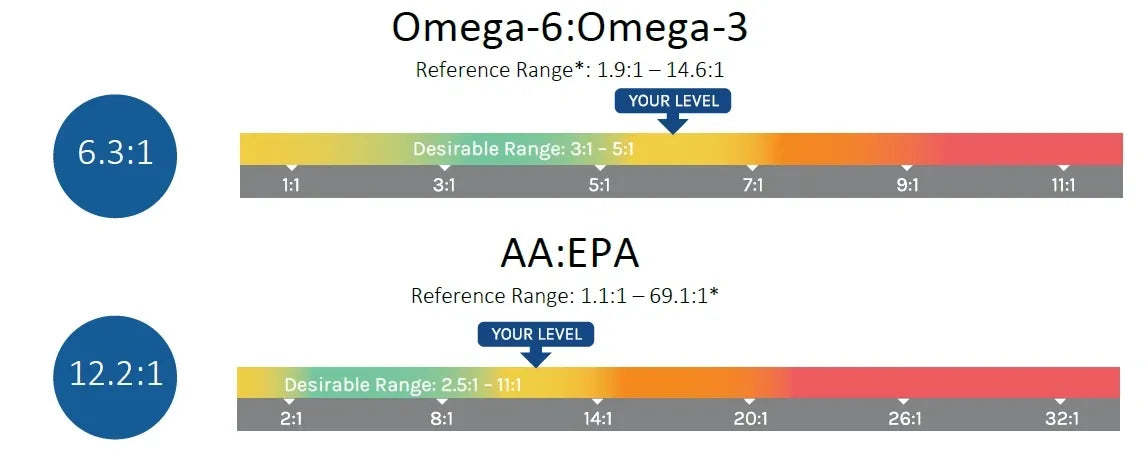
Omega-3 Index (EPA & DHA levels), Omega-6 to Omega-3 Ratio, AA to EPA Ratio (Inflammation marker), Trans Fat Index, Full Blood Fatty Acid Profile.
How it works
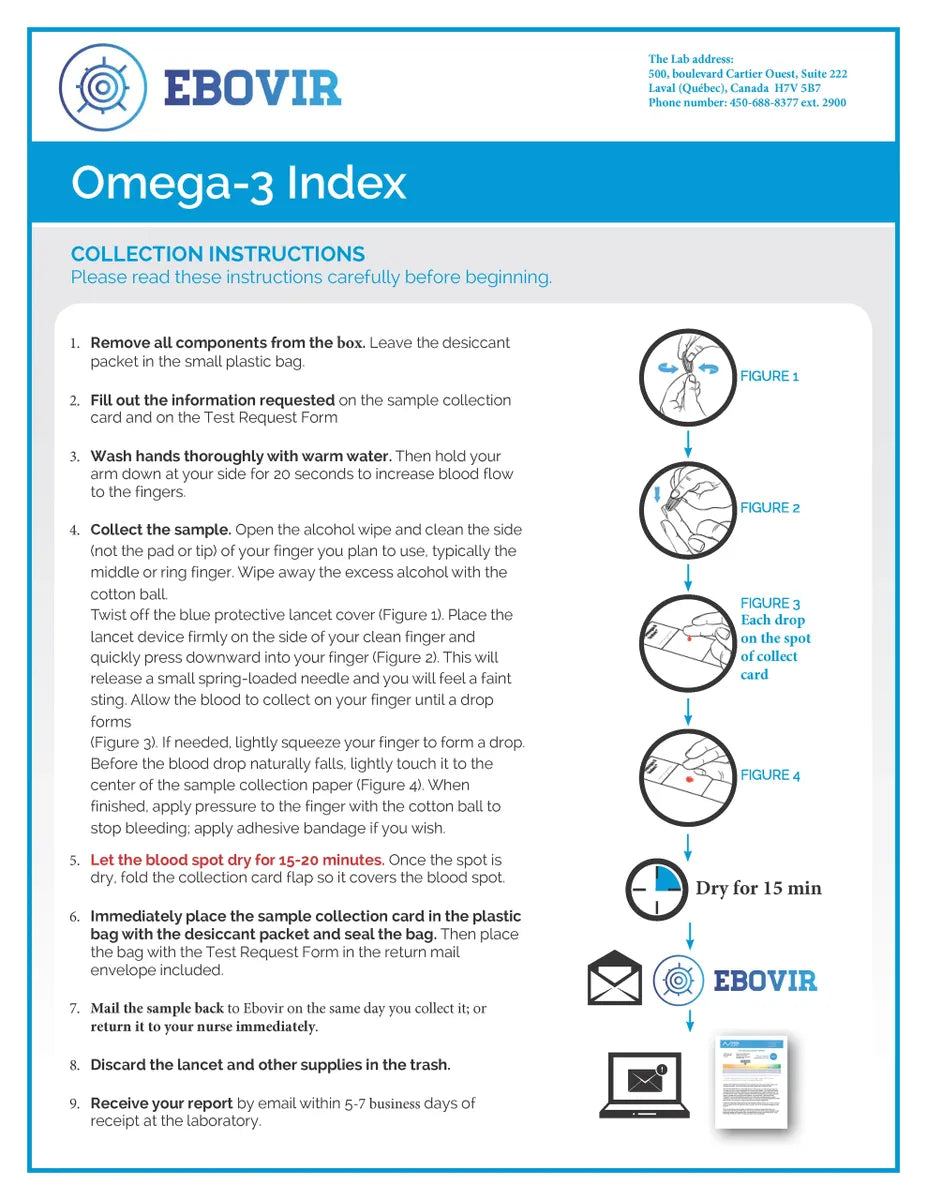
Order online → finger-prick kit is shipped to you → collect a few drops of blood on the card at home and send it back with the prepaid FedEx return envelope (schedule a FedEx pickup or drop it off at any FedEx location) → laboratory analysis → report delivered as a PDF in your EBOGENES customer portal or by email, with a free AI-assisted consultation on E-AI.ca (general information, not medical advice).
What's in the box
Finger-prick dried blood spot kit, instructions, prepaid FedEx return envelope
At a glance
- Sample: Dried blood spot (finger-prick kit)
- Collection: Home
- Report time: 5–10 business days after the laboratory receives the sample
- Test type: Screening
- Who it is for: Adults who want to check their omega-3 status, for example to review diet or supplements with their healthcare provider.
Storage & handling
Unused kit: store at room temperature in a dry place, away from direct sunlight. Use before the expiry date printed on the kit. After collection: let the card dry for 3 hours, place it in the foil bag with the desiccant, and ship it within 3 days
Laboratory & report
Sample collection kit: supplied by a qualified partner manufacturer. Laboratory analysis: an accredited partner laboratory. Report and interpretation: prepared by the EBOGENES science team and reviewed by a licensed physician. Available 5–10 business days after the laboratory receives your sample.
FAQ
What sample do I provide, and can I do it at home? Dried blood spot (finger-prick kit). Collection setting: Home.
How long until I get my report? Available 5–10 business days after the laboratory receives your sample.
Can this test diagnose a disease? Not a DNA test and not a diagnosis of heart disease.
What happens to my data? Your test data and report are stored in Canada. Samples are destroyed within 30 days after your report is issued, unless you consent to longer storage. You can request deletion at any time by emailing info@ebovir.ca or through your customer portal; we complete requests within 30 days, except for records we must keep by law. We never use your sample or data for research.
Not a DNA test and not a diagnosis of heart disease. Screening / information test – not a diagnosis. Discuss results with your healthcare provider
Data stored in Canada (AWS ca-central-1).
All 6.4 billion letters of your DNA — read, stored, and yours to keep.
Most consumer DNA tests sample a few hundred thousand positions. Whole genome sequencing reads the entire thing at 30× depth, and hands you the files at the end. No subscription required to keep them.
-
30×
average
coverage depth -
6.4B
base pairs
sequenced -
FASTQ
BAM & VCF
files included
How it runs
Kit arrives
Day 0,Saliva collection takes about five minutes. Avoid eating, drinking, or brushing your teeth for thirty minutes beforehand — that's the only preparation required.
Sample ships back
Day 1–2, Prepaid return envelope is included. Saliva samples are stable at room temperature, so there's no cold chain to manage on your end.
DNA extraction and quality check
Week 1,We extract and assess DNA quality before sequencing. If a sample fails QC, we send a replacement kit at no charge rather than sequencing something that won't yield reliable calls.
Sequencing and analysis
Week 2–6,Sequencing, alignment to GRCh38, and variant calling. This is the longest stage and we'd rather state it accurately than quote a number we miss.
Reports and files released
Week 2–6, Your reports and all three file formats become available together. You'll get an email the moment they're ready.

No. Ebogenes whole genome sequencing is offered for research and personal informational use. It is not a diagnostic test, it is not a substitute for clinical genetic testing, and it should not be used to make medical decisions on its own. If a finding concerns you, bring it to a physician or a certified genetic counsellor — that's what the files are for.

Each position in your genome is read approximately thirty times on average. Sequencing makes errors, so reading a position once tells you little; reading it thirty times lets a variant call rest on consensus. 30× is the widely used standard for reliable variant calling — below it, calls get noticeably less dependable.
Our reports flag findings for follow-up; they do not diagnose. A variant of uncertain significance is a flag, not a finding — many are later reclassified as benign. We'd rather tell you plainly that something needs a professional look than dress up an uncertain result as an answer.

Sequencing and storage happen at our Laval, Québec facility. Your data stays in Canada and is subject to Canadian privacy law. We do not sell your genetic data, and we do not share it with insurers, employers, or research programmes without your explicit, separate consent. You can request deletion at any time.

No. Your reports and all three file formats remain accessible without any ongoing payment. Download them and store your own copy if you prefer — that's the point of giving you FASTQ.